


Treatment of mixed etiology infections caused by microorganisms and protozoa susceptible to ciprofloxacin + ornidazole combination:
- infectious and inflammatory diseases of genitourinary system;
- intestinal infectious diseases.
It is necessary to take into account the current official guidelines with the rules of antibacterial agents administration.
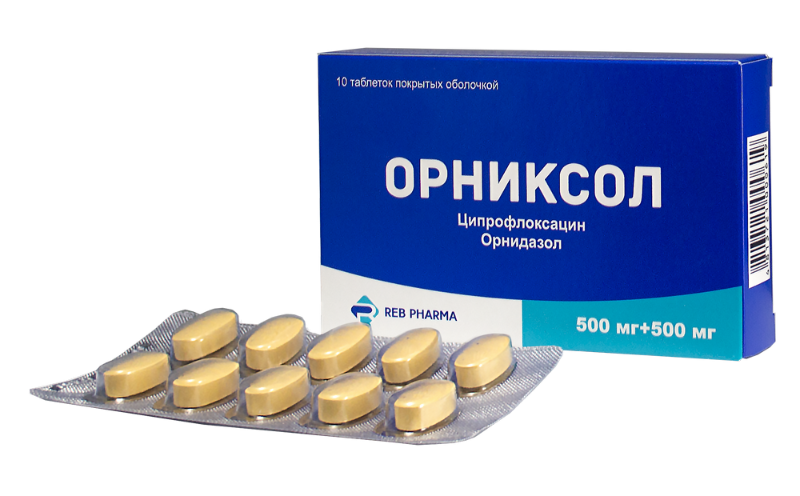
Brand name: Ornixol
International Nonproprietary Name: Ciprofloxacin + Ornidazole
Drug Form: coated tablets
Composition:
1 coated tablet contains:
Active substance: Ciprofloxacin 500 mg, Ornidazole 500 mg.
Excipients: sodium starch glycolate, sodium croscarmellose, povidone, magnesium stearate, anhydrous colloidal silicon dioxide, talc, corn starch.
Pharmacotherapeutic group
Antibacterial agents for systemic use. Combinations of antibacterial agents
АТC Code: J01RA12
Pharmacological properties
Ornixol is a combined antimicrobial and antiprotozoal drug with pharmacological effect based on the properties of its components: ciprofloxacin (the second generation fluoroquinolone derivative) and ornidazole (5-nitroimidazole a derivative).
Ciprofloxacin inhibits the bacterial enzyme DNA-gyrase and inhibits bacterial DNA synthesis; causes morphological changes in bacterial membrane and cell wall, following rapid cell death. It affects microorganisms at growth and dormancy states. It has a wide spectrum of antimicrobial activity, active against a number of aerobic gram-positive and gram-negative microorganisms:
Staphylococcus spp. (Staphylococcus aureus and Staphylococcus epidermidis –methicillin- resistant strains only), Streptococcus spp (including S. pneumoniae and S. pyogenes),Enterococcus spp., Listeria monocytogenes, Enterobacter spp., Haemophilus influenzae, Klebsiella spp., Legionella spp., Moraxella catarrhalis, Morganella morganii, Neisseria spp., Proteus spp., Pseudomonas aeruginosa, Salmonella spp., Shigella spp., Vibrio cholerae, Campylobacter spp., Citrobacter spp., Yersinia pestis, E.coli, Bacillus antracis, Serratia marscens, Providencia spp., Mycobacterium tuberculosis, Chlamydia trachomatis and Mycoplasma hominis.
Ornidazole mechanism of action is associated with damage of DNA structure in susceptible microorganisms. Active against Trichomonas vaginalis, Giardia lamblia, Entamoeba histolytica, and some anaerobic bacteria (including Bacteroides spp., Clostridium spp., Fusobacterium spp. and anaerobic cocci).
Pharmacokinetics
Ciprofloxacin is rapidly absorbed from the gastrointestinal tract (GIT). Bioavailability is 70-80%. Сiprofloxacin binding capacity with plasma proteins is 20-30%. Volume of distribution in the body is 2-3 l/kg. It undergoes biotransformation in the liver. Ciprofloxacin is also excreted by kidneys mainly by glomerular filtration and tubular secretion; small amount – through the gastrointestinal tract. The renal clearance is 0.18-0.3 l/h /kg, the total clearance is 0.48-0.60 l/h /kg. About 1% of the administered dose is excreted with the bile. In the bile Ciprofloxacin presents in high concentrations. In patients with unchanged renal function half-life ciprofloxacin is usually 3-5 hours. In case of impaired renal function half-life is increased, which requires dose adjustment.
Ornidazole is rapidly absorbed in the body. Bioavailability is 90%. Maximum plasma concentration is reached within 3 hours. Ornidazole binding to proteins is about 13%. Active substance penetrates into the cerebrospinal fluid, other body fluids and into tissues. Plasma ornidazole concentrations are in the range from 6 to 36 mg/L. After administration in multiple doses of 500 mg or 1000 mg to healthy volunteers every 12 hours cumulation coefficient is 1.5-2.5. Ornidazole is metabolized in the liver with mainly 2 metabolites: 2-hydroxymethyl and α-hydroxymethyl formation. The half-life is about 13 hours. After single dose administration 85% of the dose is excreted during the first 5 days, mainly in a form of metabolite. About 4% of the dose is excreted through the kidneys unchanged. Ornidazole is excreted by hemodialysis.
Indications for use
Treatment of mixed etiology infections caused by microorganisms and protozoa susceptible to combination of ciprofloxacin + ornidazole:
- infectious and inflammatory diseases of genitourinary organs;
- intestinal infections.
It is necessary to take into account the current official guidelines on the rules of antibacterial agents administration.
Dosage and administration
Ornixol is prescribed in case of proven susceptibility of infectious agents to both components of the drug product.
The dosage regimen and treatment duration should be indicated by the doctor individually.
Ornixol is taken orally 1 tablet 2 times a day before meal or 2 hours after meal, without chewing, with plenty of fluid. It is not recommended to be taken together with dairy products (for example, milk and yogurt) and drinks rich in minerals (for example, rich in calcium orange juice).
Use in children: prescription of drugs including ciprofloxacin in children under 18 is possible in special cases not included in the list of indications for Ornixol.
Elderly patients and patients with impaired renal function: the dose should be prescribed after consideration of the infection severity and the level of creatinine clearance. To determine the initial and maintenance doses, patients with renal failure are recommended to be guided by the data stated in the table:
|
Creatinine clearance [ml/min/1.72 м2] |
Plasma creatinine [µmol/l] |
Dose to be taken [mg] |
|
> 60 |
<124 |
See standard dosage according to the regimen |
|
30-60 |
124-168 |
250-500 mg every 12 hrs. |
|
<30 |
>169 |
250-500 mg every 24 hrs. |
|
Hemodialysis patients |
>169 |
250-500 mg every 24 hrs. |
|
Peritoneal dialysis patients |
>169 |
250-500 mg every 24 hrs. |
Patients with creatinine clearance less than 30 ml/min/1.73 m2 should take separate doses of ciprofloxacin and ornidazole.
Patients with liver failure: usually dose adjustment is not required.
Side effect
Gastrointestinal disorders: pancreatitis, glossitis, stomatitis, loss of appetite, dry mouth, metallic aftertaste, nausea, vomiting, diarrhea, abdominal pain, flatulence, cholestatic jaundice (especially in patients with liver diseases in history), hepatitis, hepatonecrosis.
Nervous system disorders: headache, dizziness, undue tiredness, impaired coordination (including amyotaxia), dysarthria, peripheral neuropathy and polyneuropathy, rarely - convulsions, weakness, tremor, insomnia or drowsiness, increased intracranial pressure, mental confusion, depression, hallucinations and other manifestations of psychotic reactions, migraine, fainting, cerebral artery thrombosis.
Sensory organs disorders: impaired taste and smell, impaired vision (diplopia, change in colour perception), tinnitus, hearing loss.
Cardiovascular system disorders: ventricular arrhythmia, QT interval prolongation, pirouette type tachycardia (“torsades de pointes”), heart rhythm disturbance, decreased blood pressure
Hematopoietic system: agranulocytosis, pancytopenia, bone marrow suppression, leukopenia, granulocytopenia, anemia, thrombocytopenia, leukocytosis, thrombocytosis, hemolytic anemia.
Laboratory test values: hypoprothrombinemia, “hepatic transaminases” and alkaline phosphatase increased, hypercreatininsemia, hyperbilirubinemia, hyperglycemia, crystalluria (with alkaline urine and low diuresis).
Genitourinary system: crystalluria, dark urine, acute renal failure, hematuria, glomerulonephritis, dysuria, polyuria, urine retention, decreased renal excretion of nitrogen, interstitial nephritis.
Allergic reactions: pruritus, urticaria, blisters accompanied by bleeding, the appearance of small nodules forming scabs, drug fever, spot hemorrhages on the skin, facial or larynx edema, shortness of breath, eosinophilia, increased photosensitivity, vasculitis, nodal fever, multiforme erythema, epidermal necrolysis (Lyell's syndrome).
Musculoskeletal and connective tissue disorders: arthralgia, myalgia, arthritis, increased muscle tone, muscle cramps, muscle weakness, tendonitis, tendon rupture (mainly Achilles), myasthenic syndromes exacerbation.
Infections and infestations: fungal superinfection, pseudomembranous colitis
Respiratory system disorders: shortness of breath (including asthma).
General disorders and administration site conditions: pain syndrome of non-specific etiology, headache, general malaise, fever, edema, excessive sweating (hyperhidrosis).
Metabolism and nutrition disorders: anorexia, hyperglycemia, hypoglycemia.
Contraindications
Hypersensitivity to ciprofloxacin or ornidazole and other imidazole derivatives, as well as drug excipients;
· hematological diseases;
· inhibition of bone marrow hematopoiesis;
· central nervous system disorders (epilepsy, multiple sclerosis, other brain damage);
· pseudomembranous colitis;
· concomitant intake of tizanidine;
· children up to 18 years;
· pregnancy and lactation;
· glucose-6-phosphate dehydrogenase deficiency.
Precautions for use
Special precautions for use:
Patients with epilepsy, history of seizures, vascular diseases and organic brain damage, due to the risk of central nervous system adverse reactions, the drug should be prescribed only in vital cases.
In order to avoid the development of crystalluria it is unacceptable to exceed the daily recommended dose; to maintain acidic pH of urine it is necessary to drink sufficient amount of liquid.
The drug should be used with caution in patients with severe cerebral vessels atherosclerosis, cerebrovascular and mental disorders.
In case of severe and prolonged diarrhea during or after treatment, the diagnosis of pseudomembranous colitis should be excluded; otherwise it requires immediate drug discontinuation and an appropriate treatment.
Candidiasis exacerbation may occur, which will also require an appropriate treatment.
In genital tract infections it is necessary to treat the sexual partners together and confirm the pathogen susceptibility by laboratory tests.
Resistance:
In case of prolonged therapy and during the treatment of nosocomial infections and/or infections caused by Staphylococcus and Pseudomonas there could be a potential risk of ciprofloxacin-resistant bacteria isolation.
Streptococcal infection (including Streptococcus pneumoniae). Ciprofloxacin is not recommended for the treatment of streptococcal infections due to lack of efficacy.
Intraperitoneal infectious diseases. There is limited evidence on ciprofloxacin efficacy for the treatment of postoperative intraperitoneal infections.
“Travelers' diarrhea” When choosing ciprofloxacin, it is necessary to take into account information about the drug resistance of the corresponding pathogenic microorganism in a country to visit.
Bone and joint infectious diseases. Ciprofloxacin should be prescribed in combination with other antimicrobial drugs and only after microbiology testing. In prolonged therapy and in the treatment of nosocomial and/or Staphylococcus and Pseudomonas determined infections there could be a potential risk of ciprofloxacin-resistant bacteria isolation.
Genital tract infections. In case of genital infection, presumably caused by Neisseria gonorrhea strains resistant to fluoroquinolones, local information on ciprofloxacin resistance
Musculo-skeletal system
In case of pain in tendons or the first signs of tendovaginitis appeared the treatment should be discontinued. During the treatment peripheral blood should be monitored.
Special precautions for use in patients with kidney & liver disorders and elderly patients. The drug should be used with caution in patients with impaired renal function or liver pathology.
In elderly patients caution should be exercised when using the drug taking into account characteristics of age-related pathology and concomitant drug therapy.
Hypersensitivity. After the single dose intake hypersensitivity reactions may occur, including anaphylactic and anaphylactoid reactions. In case of these reactions it is necessary to withhold the drug and prescribe an appropriate conservative treatment.
Hepatobiliary system. Cases of liver necrosis and life-threatening liver failure associated with ciprofloxacin have been reported. In the event of any signs or symptoms of liver failure occurred the drug should be discontinued.
Glucose-6-phosphate dehydrogenase deficiency. In patients with glucose-6-phosphate dehydrogenase deficiency ciprofloxacin can cause hemolytic reactions development. It is necessary to avoid this drug prescription to such patients, unless potential benefit is greater than risk. In this case the potential risk of hemolysis should be monitored.
Cytochrome P450. Ciprofloxacin is a moderate inhibitor of isoenzyme CYP450 1A2 and can cause an increase in serum concentration of the drugs metabolized by this enzyme.
Cardiovascular system. Since ciprofloxacin intake is associated with cases of RT interval prolongation on the ECG, caution should be exercised when treating the patients with the risk of arrhythmia: congenital QT interval prolongation; simultaneous administration of antiarrhythmic drugs of class 1A and III, antidepressants, macrolides, antipsychotics; electrolyte disturbances; women and elderly patients are more sensitive; heart disease.
Photosensitivity. It has been demonstrated that ciprofloxacin can cause photosensitivity reactions. Patients taking ciprofloxacin should avoid direct exposure to sunlight and UV radiation.
Food and dairy products. Avoid concomitant intake of dairy products or drinks rich in minerals (milk, calcium-enriched yogurt, orange juice) since ciprofloxacin absorption may decrease.
In case of hemodialysis it is necessary to take into account the drug half-life decrease and prescribe additional doses before or after hemodialysis.
Concentration of lithium salts, creatinine and electrolytes concentration should be controlled when using lithium therapy. The effect of other drugs may be increased or weakened during the treatment.
Drug use in pregnancy and lactation. The intake of Ornixol in pregnancy and lactation is not recommended. When it is necessary to prescribe Ornixol, the doctor should take into account the benefit/risk ratio; breast-feeding should be discontinued during the treatment.
Effects on ability to drive and use machines
During the treatment it is better to avoid potentially dangerous activities required increased attention and reaction.
Overdose
Treatment: symptomatic.
Dizziness, tremor, headache, fatigue, cramps, hallucinations, confusion, abdominal discomfort, nausea, vomiting, impaired liver and kidney function, crystalluria and hematuria, increased symptoms described in section “Side effects”. Reversible nephrotoxicity reports have been registered.
ECG monitoring should be performed in connection with possible QT interval prolongation. Renal function, including urine pH control is recommended to prevent crystalluria. Patients should adhere to adequate fluid intake. Only small amount of ciprofloxacin (<10%) is excreted by hemodialysis or peritoneal dialysis. Diazepam should be prescribed in case of seizures.
Drug-to-drug interactions
Ciprofloxacin
Due to decrease in microsomal oxidation processes activity in hepatocytes the following processes occur: concentration increase and T1/2 prolongation of theophylline and other xanthines, oral hypoglycemic drugs and indirect anticoagulants and lead to prothrombin index reduction.
It enhances nephrotoxic effect of cyclosporine and increase serum creatinine.
At the same time it enhances the effect of indirect anticoagulants.
Concomitant oral administration of Fe-containing drugs, sucralfate and antacid drugs containing Mg2 +, Ca2 +, A13 + leads to decrease in ciprofloxacin absorption, so it should be prescribed 1-2 or 4 hours after these drugs intake.
NSAIDs (excluding acetylsalicylic acid) increase the risk of seizures.
Didanosine reduces ciprofloxacin absorption due to complexes formation (with Mg2+, Al3+ contained in didanosine).
Metoclopramide accelerates absorption rate which leads to time prolongation to reach Cmax.
Concomitant administration of uricosuric agents leads to decrease in secretion (up to 50%) and an increase in ciprofloxacin plasma concentration.
Tizanidine should not be taken along with ciprofloxacin. An increase in serum tizanidine concentration is associated with hypotensive and sedative effects potentiation.
Caution should be exercised with antiarrhythmic drugs of class 1A or class III, since ciprofloxacin may have an additive effect with QT interval prolongation.
Other xanthine derivatives. Concomitant use of ciprofloxacin and caffeine or pentoxifylline (oxpentifillin) can lead to increase in serum concentration of xanthine derivatives.
The concomitant use of ciprofloxacin (moderate inhibitor of isoenzyme CYP450 1A2) with ropinirole, medicines contained lidocaine, clozapine and sildenafil leads to increase in Cmax and AUC of the latter; therefore these combinations are acceptable only after the benefit/risk ratio evaluation.
Methotrexate. Concomitant use of ciprofloxacin may worsen methotrexate transport in renal tubules potentially leading to methotrexate concentration increase and an increased risk of methotrexate-related toxic reactions.
Omeprazole. Concomitant use of ciprofloxacin and omeprazole leads to a slight decrease in ciprofloxacin Cmax and AUC.
Ornidazole:
Unlike other nitroimidazole derivatives ornidazole does not inhibit aldehyde dehydrogenase and therefore is compatible with alcohol. However ornidazole enhances the effect of oral coumarin anticoagulants, which requires an appropriate dose adjustment.
Ornidazole prolongs the effect of muscle relaxant vecuronium bromide.
Concomitant use of phenobarbital with other inducers of liver enzymes reduces ornidazole period of circulation in blood serum while enzyme inhibitors (for example, cimetidine) increases.
Storage conditions and shelf life
Store at temperature less than 25°C.
Keep out of reach of children!
Shelf life 3 years from the production date. Do not use after the expiration date.
Prescription status
By prescription
Packaging
Film-coated tablets. 10 tablets in a blister made of polyvinyl chloride film and aluminum foil. 1 or 2 blisters with a leaflet in a cardboard box.
Manufacturer Information
Foreign production and trade unitary enterprise “Reb-Pharma”, 223216, Republic of Belarus, Minsk region, Chervensky district, Smilovichi, Sadovaya st., 1, tel./fax: (+375) 17 240 26 35,
e-mail: rebpharma@rebpharma.by, http://www.rebpharma.by
Comment type is not specified in the component properties.